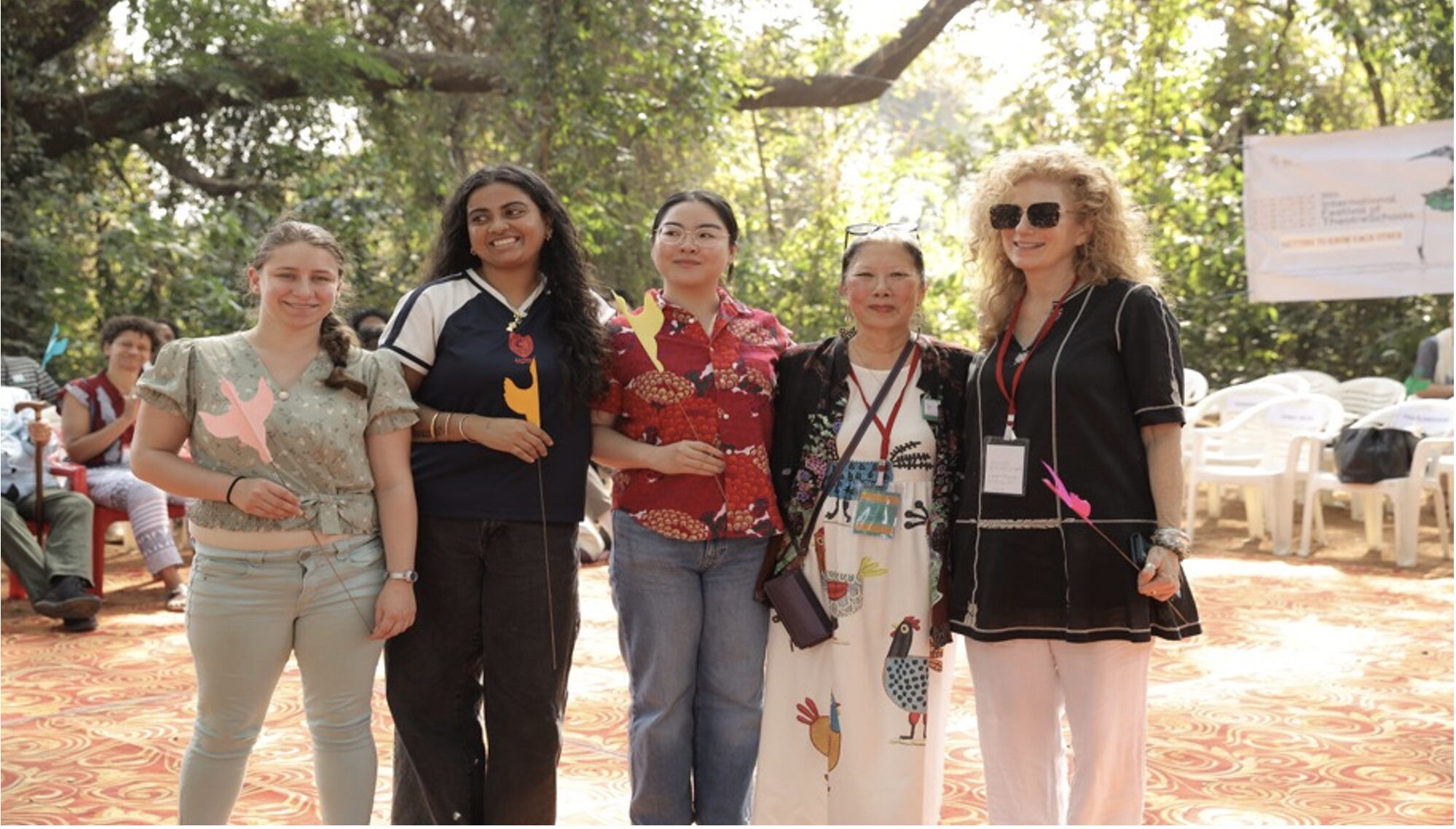
For three School of Drama students and two faculty members, spring semester began half a world away. Costume Design professors Susan Tsu and Mindy Eshelman took third-year MFA Costume Design students Mary Alice Groat and Harumi Hirata, and second-year MFA Sound Design student Sabina Ali to India for the fourth annual International Festival of Theatre Schools (IFTS) in January. Hosted and organized by the School of Drama and Fine Arts at the University of Calicut, Thrissur, IFTS has a mission to foster a dynamic exchange of global pedagogical practices in theatre and performance. Carnegie Mellon University has sent a delegation from its School of Drama the last three years of the festival, with Tsu championing and leading the effort.
“The IFTS provides the opportunity for our students to meet brilliant theatre practitioners who are as jazzed about making theatre as they are, and to understand that theatre is made for different reasons in wildly different ways across the world,” said Tsu. “Experiences like these inevitably lead to creating work that is more deeply informed and artistically brave.”
Ali agrees. “As a designer for theatre, it is imperative to expose yourself to new ideas and perspectives,” she said. “As an American, it is very easy to fall into a bubble of what culture is, and going on trips abroad helps to broaden your knowledge base on how cultures exist in different parts of the world, especially from a theatrical lens.”
“IFTS is a living classroom, a civic theatre, and an open archive of global healing practices.”
– International Festival of Theatre Schools Website
THEATRE AND HEALTH
The theme of this year’s festival was “Carnival of Pedagogy: Theatre and Health,” reimagining the pedagogical potential of the performing arts in an era marked by physical vulnerability, mental distress, social fragmentation, and ecological uncertainty, according to the festival website. Attendees came from India, Great Britain, Japan, South Africa, France, Belgium, Bulgaria, Australia, Germany, Russia, Hungary, and the United States. Theatre students, professors, and practitioners were joined by health professionals for the festival, which centered theatre as both a pedagogical praxis and an agent of health, care, and community restoration.
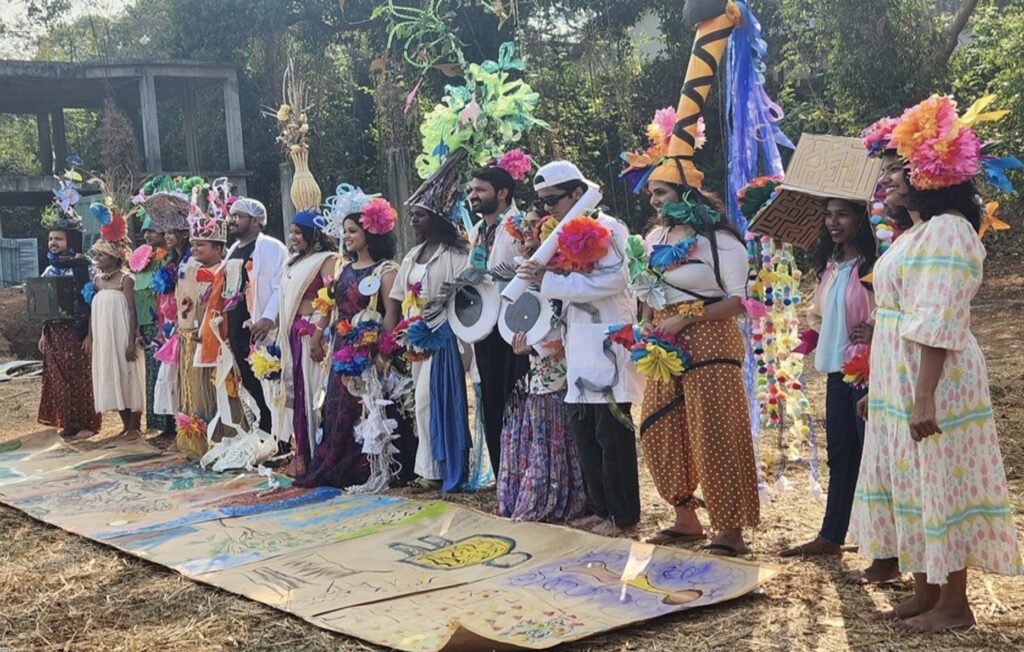
The CMU delegation conducted a three-day workshop that focused on this year’s theme. Eshelman and Tsu conceived an experience for fifteen student participants entitled An Unexpected Fashion Journey. The workshop began with a meditation led by Eshelman, which guided participants through their bodies, encouraging them to tune into any health concerns. Following the meditation, students painted what was at the center of their journey and shared what surfaced as most important. Ali listened to the students’ stories and began composing and incorporating sound, while Groat and Hirata joined Eshelman and Tsu in working with students to create headdresses that were symbolically representative of their health concerns. The workshop culminated in a runway walk that drew on the students’ personal experiences of pain and transformed them into a celebration of creativity and community.
KERALA KALAMANDALAM
Part of the trip included a visit to Kerala Kalamandalam, India’s premier public institution dedicated to the preservation and promotion of Kerala’s traditional performing arts. For Hirata, whose own artistic practice is shaped by training and professional experience within Japanese, American, and British theatrical traditions, one of the most impactful parts of the journey was seeing both traditional and innovative Indian theatre.
“There is so much cultural richness outside of your knowledge and past experiences,” she said. “It was something you could see in the visuals and the narrative–their core principles and disciplines have been kept for centuries.”
Groat added, “I think international experiences are really valuable because they can open us to a completely different viewpoint on the things we are very familiar with. In the Indian theatre that we experienced, there was a much stronger emphasis on rhythm and precise, controlled movement than Western theatre.”
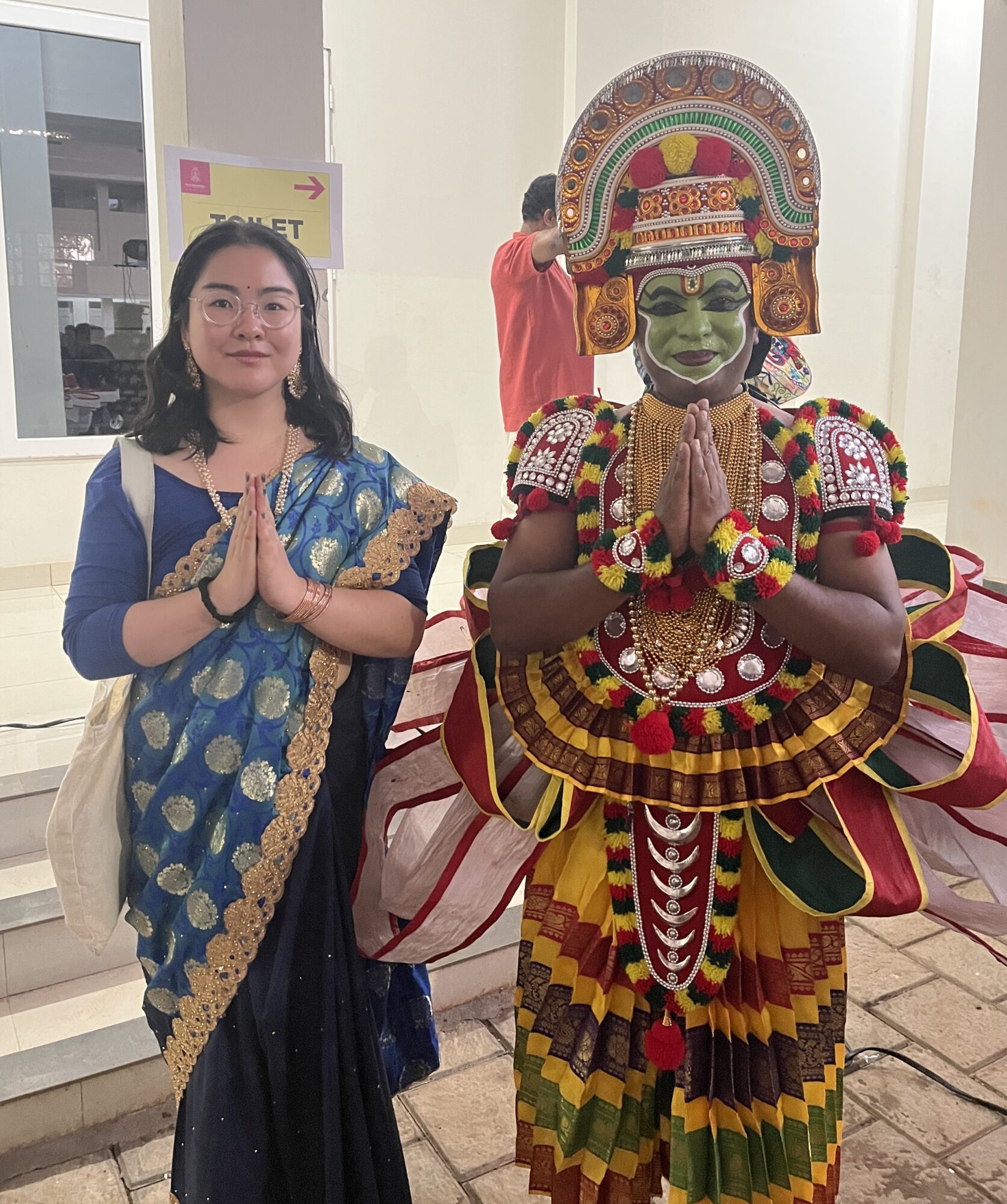
Harumi Hirata with a performer from Kerala Kalamandalam.
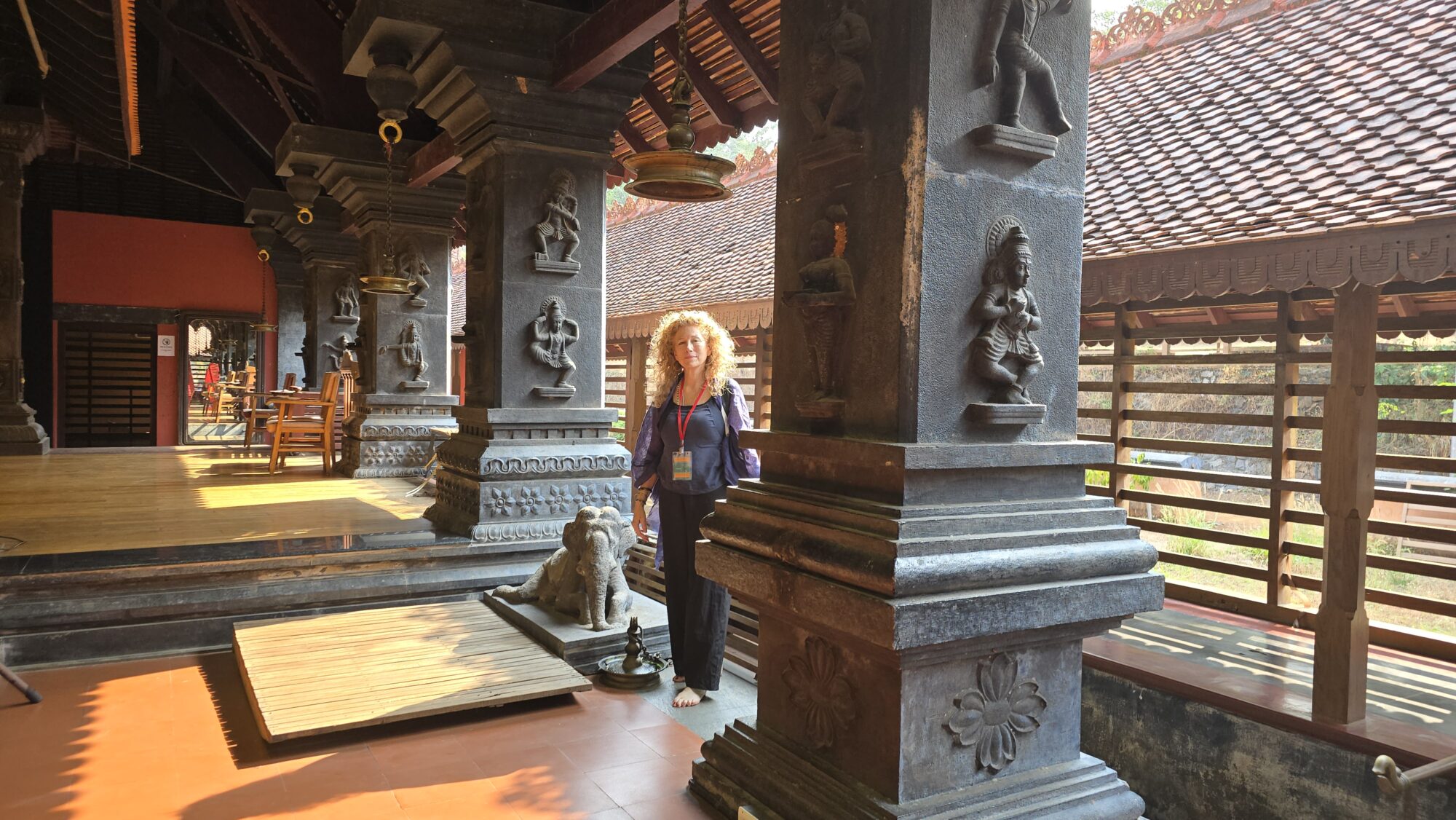
Mindy Eshelman at Kerala Kalamandalam – India’s premiere public institution for the preservation and promotion of traditional performing arts.
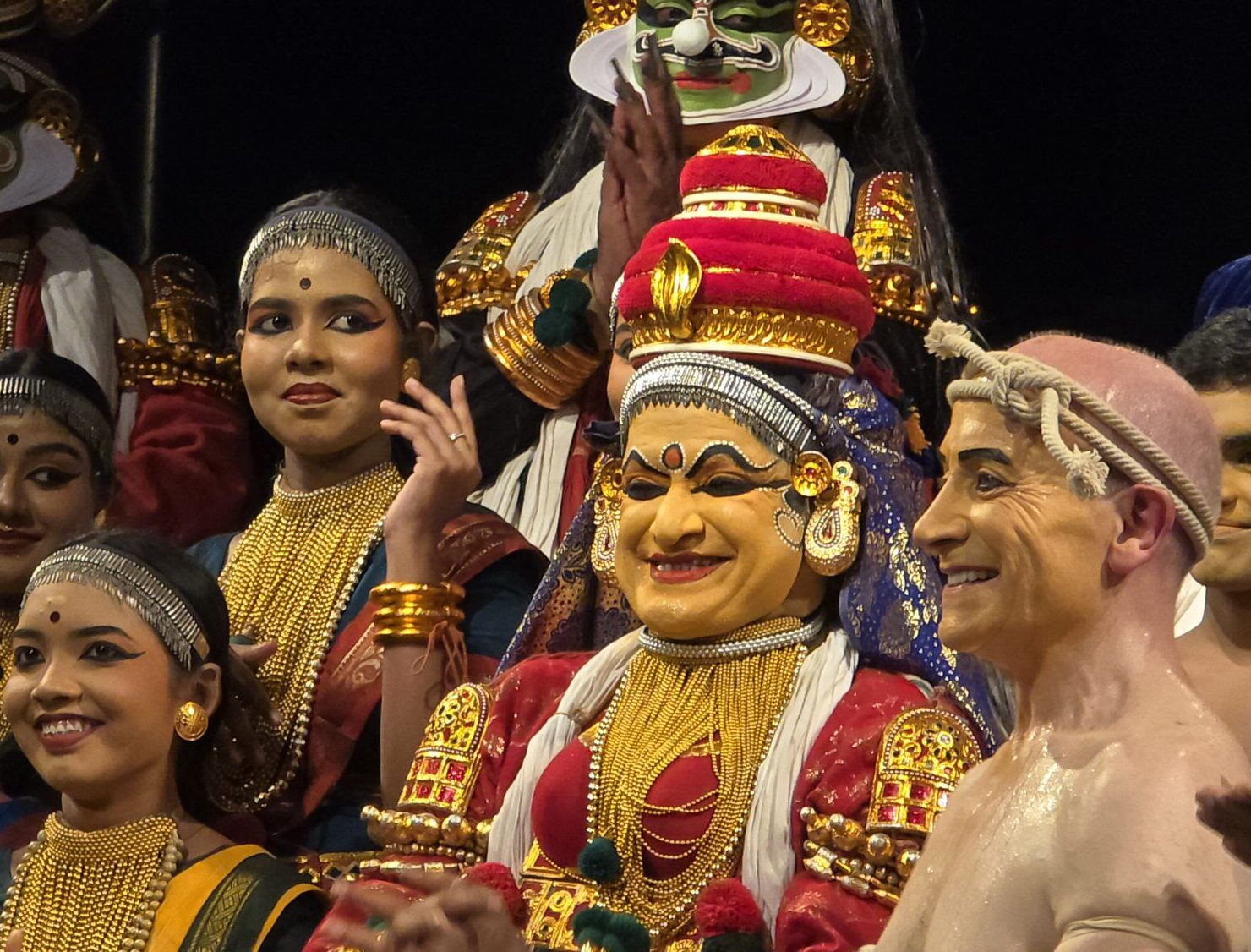
An historic first performance of an adaptation of The Old Man and the Sea by Kerala Kalamandalam members.
Tsu has long been a champion of international travel and ensuring that students in the School of Drama have opportunities to experience the artistry of different cultures.
“As a child, I was blessed to have parents who were not only passionately engaged as teachers in traditional education, but also were keenly aware of how travel, and opening the eyes of young people to the world was one of the best educations they could ever give,” she said.
In that spirit, as Tsu prepares to retire from CMU in 2027, the School of Drama has established the Susan Tsu Travel & Experience Fund, which will support School of Drama students in all areas of study who wish to expand their education with travel experiences.